
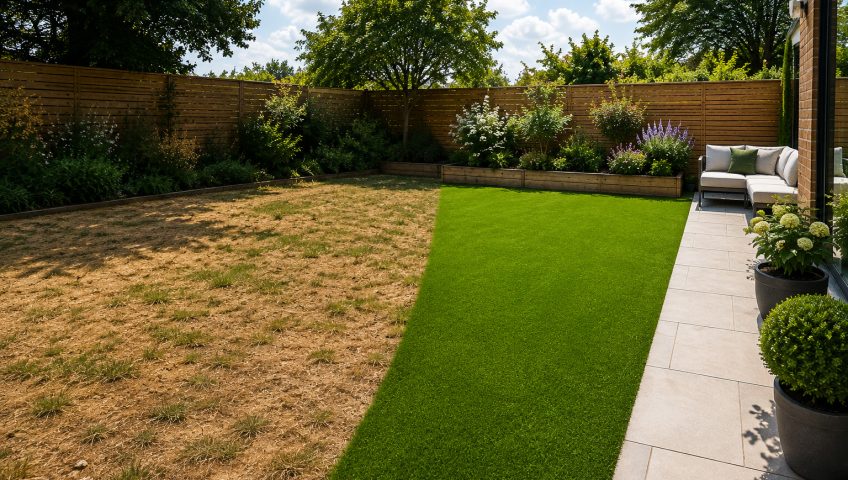
After a hot, dry summer, it can be difficult to know whether a tired-looking lawn will recover or whether it is time to start again.
Brown grass does not automatically mean your lawn is dead. Established grass can naturally turn brown during prolonged periods of heat and drought and recover when rainfall returns. The RHS recommends allowing established lawns to recover naturally where possible rather than using large amounts of mains water.
However, some lawns suffer more serious damage. If large areas have become thin, bare, patchy or completely dead, repairing individual areas may no longer produce the finish you want. In these situations, lawn replacement or professional turfing can provide a much more reliable way to restore the garden.
At NCRoberts Landscapes, we provide professional lawn installation, turfing and artificial grass solutions for homeowners across Buckinghamshire, Hertfordshire and surrounding areas.
Has the Heatwave Damaged Your Lawn?
Extended periods of high temperatures and very little rainfall can put considerable stress on a lawn.
Typical signs of heat and drought damage include:
- Brown or straw-coloured grass
- Large dead areas
- Thin or patchy growth
- Bare soil showing through
- Areas that fail to recover after rainfall
- Increased weeds and moss
- Cracked or extremely dry soil
- Uneven or worn areas caused by heavy use
It is important to remember that a brown lawn is not necessarily a dead lawn. The RHS explains that established lawns can go dormant during drought and recover when rain returns.
The question is therefore not simply “Is my lawn brown?”
The better question is:
“Will my lawn recover to a standard I’m happy with?”
When Can a Damaged Lawn Be Repaired?
Some lawns can be brought back with the right renovation work.
If the grass is still present but has become thin or patchy, renovation may include:
- Scarifying
- Aerating
- Improving the soil
- Reseeding bare areas
- Levelling uneven ground
- Improving drainage
- Removing weeds and unwanted growth
The condition of the soil is particularly important. A lawn can struggle even when there is enough rainfall if the soil is compacted or has developed dry patches.
The RHS notes that dry patch can cause areas of grass to turn brown because water is unable to penetrate the affected soil properly. In severe cases, the affected turf and some of the underlying soil may need to be removed before fresh turf or seed is introduced.
When Is Lawn Replacement the Better Option?
If your lawn has extensive dead areas, poor soil or years of wear and tear behind it, patching individual areas may simply leave you with an inconsistent finish.
Professional lawn replacement can make more sense when:
Most of the lawn has died
If large sections are completely bare and there is little healthy grass remaining, replacing the lawn can be more effective than repeatedly trying to repair it.
The lawn is heavily uneven
Uneven ground can make mowing difficult and create puddling or drainage problems. Removing the existing lawn gives an opportunity to reshape and level the area properly.
The soil needs improving
A new lawn is only as good as the ground beneath it. Proper preparation can involve removing unsuitable material, improving the soil, levelling the area and creating a suitable base for new turf.
The garden has become difficult to maintain
If you are constantly dealing with weeds, bare patches, muddy areas or poor drainage, a complete lawn renovation may provide a better long-term solution.
New Turf or Artificial Grass?
Replacing a lawn does not necessarily mean choosing traditional grass.
For many homeowners, the decision comes down to natural turf vs artificial grass.
Natural Turf
Natural turf remains a popular choice for homeowners who want the traditional look and feel of a real lawn.
It can work particularly well for:
- Family gardens
- Larger outdoor spaces
- Traditional garden designs
- Gardens where children use the lawn
- Homeowners who prefer natural planting and landscaping
Professional turf installation can also create an immediate visual transformation compared with growing a new lawn from seed.
The RHS recommends establishing new lawns at appropriate times of year, with autumn being particularly suitable because soil temperatures remain favourable while rainfall generally helps new turf establish.
Artificial Grass
Artificial grass provides an alternative for homeowners looking for a consistently green, lower-maintenance lawn.
It can be particularly useful for:
- Busy households
- Small gardens
- High-use areas
- Gardens where maintaining natural grass is difficult
- Homeowners wanting a consistent appearance throughout the year
Our lawns and artificial grass services include both natural turf and artificial grass options, allowing us to recommend a solution based on the garden rather than simply installing the same product everywhere.
Is August a Good Time to Replace a Lawn?
Timing matters when replacing natural turf.
It can be tempting to lay a new lawn immediately after a hot summer, but new turf needs suitable conditions to establish successfully.
The RHS advises that new turf is generally best laid from mid-autumn through winter and into early spring when soil conditions are suitable. Laying turf during hot, dry summer conditions can make establishment more difficult and increase the need for watering.
That means late summer can be an excellent time to plan your lawn replacement, assess the condition of the existing garden and prepare the ground, with the actual turf installation scheduled when conditions are more favourable.
For artificial grass, seasonal establishment is not an issue because there is no living root system that needs to establish.
How We Replace a Damaged Lawn
A professional lawn replacement should involve more than simply removing the old grass and rolling out new turf.
At NCRoberts Landscapes, our approach includes assessing the existing area and preparing the ground properly before installing the new lawn.
1. Remove the Existing Lawn
Where required, the damaged or unwanted lawn is removed to create a clean working area.
2. Prepare the Ground
The ground is excavated, levelled and prepared for the new lawn.
This stage is crucial because poor preparation can affect the appearance and longevity of the finished lawn.
3. Improve the Soil
Where necessary, suitable topsoil and soil improvements can be introduced to provide a better growing environment for natural turf.
4. Install the New Lawn
Depending on the chosen solution, we can install premium natural turf or high-quality artificial grass.
5. Finish the Edges
The lawn is finished neatly against surrounding patios, pathways, borders, decking or other landscaping features.
The result is a cleaner, more usable garden with a lawn designed around the rest of the outdoor space.
Could Your Lawn Recover Naturally?
Before deciding to replace your lawn, it is worth giving established grass an opportunity to recover.
The RHS advises that established lawns can survive periods of drought by becoming dormant and turning brown. Once rainfall returns, healthy grass may begin growing again.
However, if the lawn remains sparse or bare after conditions improve, or if it was already in poor condition before the drought, replacement may be the more practical option.
This is where professional assessment can help.
Rather than automatically replacing the entire lawn, we can look at its condition and help determine whether repair, renovation, natural turf or artificial grass is the most suitable option.
How to Make Your New Lawn More Resilient
Replacing a damaged lawn is also an opportunity to think about future weather conditions.
A well-prepared lawn with healthy roots will generally cope better with periods of dry weather.
The RHS recommends practices such as maintaining healthy soil, aerating where appropriate and avoiding excessively close mowing during drought conditions. Longer grass can help lawns cope with dry weather more effectively.
Other considerations include:
- Choosing suitable turf
- Preparing the soil properly
- Improving drainage
- Avoiding unnecessary compaction
- Keeping grass slightly longer during dry spells
- Considering lower-maintenance landscaping alongside the lawn
A new lawn does not have to be treated as an isolated feature. It can be incorporated into a complete garden design alongside patios, decking, fencing, planting, pathways and other landscaping features.
Lawn Replacement Across Buckinghamshire and Surrounding Areas
NCRoberts Landscapes provides professional lawn replacement, turfing and artificial grass installation as part of our wider landscaping service.
We work across areas including Aylesbury, Aston Clinton, Wendover, Tring, Berkhamsted, Watford, Hemel Hempstead, Weston Turville, St Albans, Chesham, Amersham, Great Missenden, Stoke Mandeville, Haddenham, Chalfont St Peter and Beaconsfield.
If your lawn has been badly affected by heat, drought, heavy use or years of wear, we can assess the space and discuss the most suitable way forward.
Frequently Asked Questions About Lawn Replacement
How do I know if my lawn needs replacing?
If your lawn has extensive dead patches, bare areas, persistent weeds, compacted soil or has been badly damaged by heat and drought, replacing it can often be more effective than trying to restore it. A lawn that has suffered widespread damage may require significant preparation before it will look healthy again.
Is it better to replace a lawn with natural turf or artificial grass?
It depends on how you use your garden and how much maintenance you want. Natural turf provides a traditional lawn and can be a good choice where you want a natural garden environment. Artificial grass offers a consistently green appearance with much less ongoing mowing and watering.
What is the best time of year to replace a lawn?
Natural turf can generally be installed during several parts of the year, provided the ground conditions are suitable. Spring and autumn are often favourable because temperatures and rainfall can help new turf establish. However, professional lawn replacement can be planned around the condition of the existing garden and the type of lawn required.
Can you replace a lawn damaged by drought?
Yes. Severely drought-damaged lawns can be removed and replaced once the ground has been properly prepared. This may involve removing the existing turf, improving the soil, levelling the area and installing new natural turf or artificial grass.
How long does a new natural turf lawn take to establish?
A newly laid natural turf lawn needs regular watering and appropriate care while the roots establish. The exact time varies depending on weather, soil conditions and the type of turf used.
Is artificial grass a good option for a low-maintenance garden?
For homeowners looking to reduce mowing and watering, artificial grass can be a practical low-maintenance alternative to natural turf. It can also provide a consistent appearance throughout the year.
How much does lawn replacement cost?
The cost depends on the size and condition of the existing lawn, ground preparation required, access to the garden and whether you choose natural turf or artificial grass. A site assessment is the best way to establish the requirements and provide an accurate quotation.
Can you replace a lawn as part of a complete garden renovation?
Yes. Lawn replacement can be incorporated into a wider landscaping project alongside patios, decking, fencing, planting, artificial grass, garden design and other landscaping work.
Ready to Replace Your Tired Lawn?
A damaged lawn does not have to stay that way.
Whether you need a small lawn renovation, a complete natural turf replacement or a low-maintenance artificial grass installation, the right solution can completely change the appearance and usability of your garden.
NCRoberts Landscapes has over 20 years of landscaping experience, providing professional garden transformations throughout Buckinghamshire and surrounding areas.
Contact our friendly team today for a free, no-obligation quotation.
Get a Free Quote
📞 07989 064606
📧 info@ncrobertslandscapes.co.uk
🌐 www.ncrobertslandscapes.co.uk